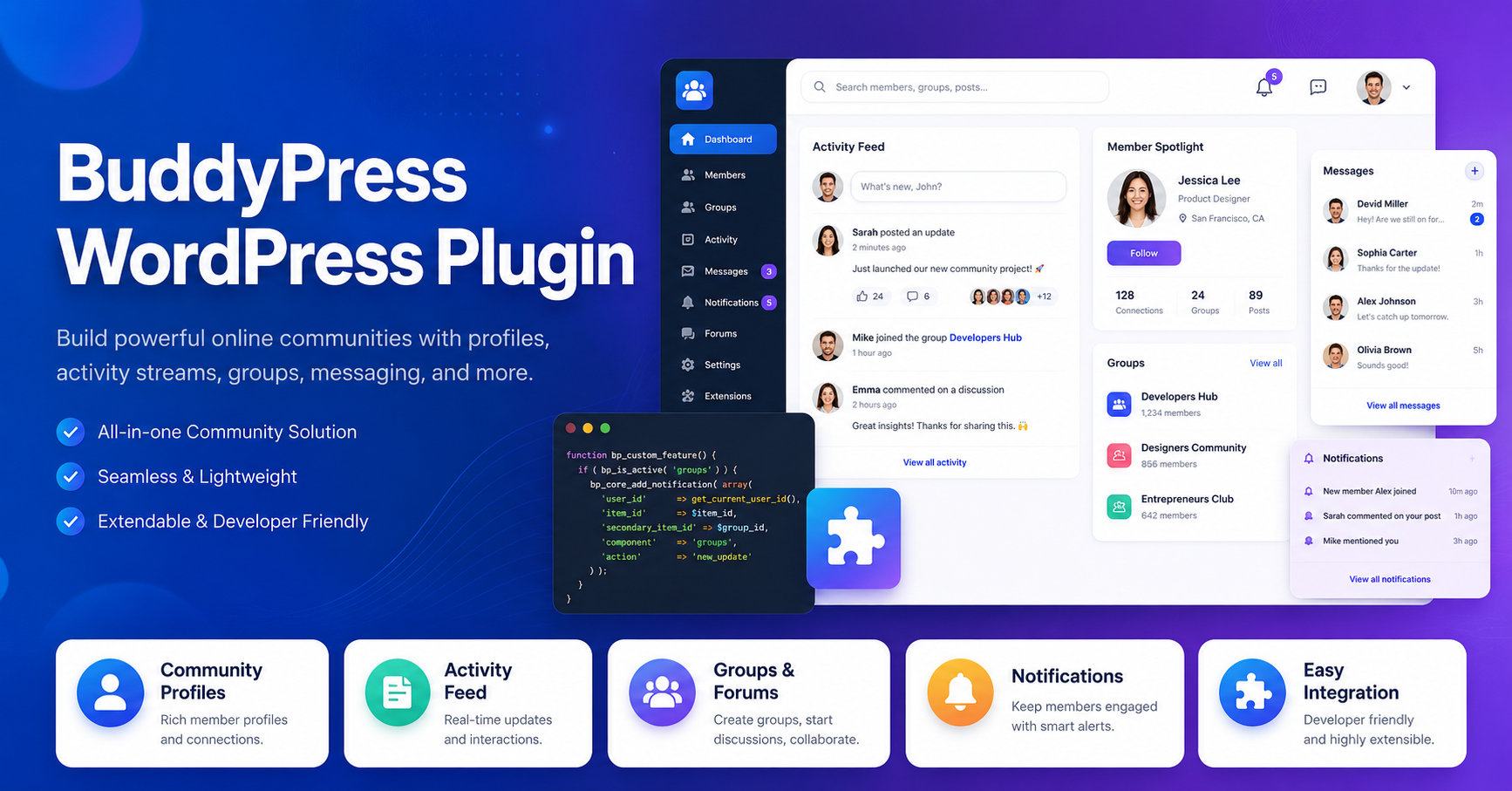
If you want to build an online community, social network, private group website, or member-based platform with WordPress, BuddyPress is one of the best free plugins to consider. It adds social networking features to WordPress and helps turn a normal website into an interactive community platform.
BuddyPress allows users to create profiles, connect with other members, join groups, post updates, send private messages, receive notifications, and participate in community discussions. It is a strong option for membership websites, online learning communities, company intranets, school portals, niche communities, and interest-based networks.
The biggest advantage of BuddyPress is that it brings social community features into WordPress without forcing you to build everything from scratch. If your goal is to create a website where users can interact with each other, BuddyPress gives you the foundation.
Is BuddyPress Free?
Yes, BuddyPress is completely free and available from the official WordPress plugin directory. You can install it directly from your WordPress dashboard by going to Plugins > Add New and searching for BuddyPress.
Because BuddyPress is already free, you do not need to download it from any third-party website. Avoid unofficial plugin download sites because they may provide modified or unsafe files.
BuddyPress is also supported by a large WordPress community, which makes it a trusted option for users who want to build a free WordPress community website.
What Is BuddyPress Used For?
BuddyPress is used to add community and social networking features to a WordPress website. A normal WordPress site is usually focused on pages, posts, and content publishing. BuddyPress adds member interaction, profile management, group activity, messaging, and social features.
You can use BuddyPress for:
- Online communities
- Private membership websites
- Student portals
- Company intranets
- Course communities
- Fitness communities
- Creator communities
- Product user groups
- Nonprofit volunteer networks
- Local interest groups
- Social networking websites
- Team collaboration platforms
Related keywords for this topic include WordPress community plugin, social network plugin, member profile plugin, activity stream plugin, private messaging plugin, BuddyPress groups, WordPress membership community, and online community platform.
Main Features of BuddyPress
1. Member Profiles
BuddyPress allows users to create and manage their own profiles. Member profiles can include basic information, profile photos, cover images, and custom profile fields depending on your setup.
2. Activity Streams
Activity streams allow users to post updates, share activities, comment, and interact with other members. This gives your website a social networking feel.
3. User Groups
BuddyPress supports user groups where members can join discussions around specific topics. Groups can be useful for courses, teams, departments, clubs, events, and private communities.
4. Private Messaging
Members can send private messages to each other. This is useful for community websites where direct communication is important.
5. Friend Connections
BuddyPress allows users to connect with other members. This makes the website feel more personal and interactive.
6. Notifications
Users can receive notifications for messages, mentions, group activity, and other community actions.
7. WordPress Theme Compatibility
BuddyPress works with many WordPress themes. However, the final design depends on your theme styling, so you may need small design adjustments for the best appearance.
Benefits of Using BuddyPress
BuddyPress helps increase engagement by giving users a reason to return to your website. Instead of only reading blog posts or pages, users can join groups, update profiles, message other members, and participate in discussions.
It is also flexible. You can build a public social network, a private community, a student learning group, or an internal company portal. You can enable only the components you need, which keeps the site cleaner and easier to manage.
Another benefit is ownership. Unlike building a community only on Facebook, WhatsApp, or LinkedIn, BuddyPress allows you to keep your community on your own website. This gives you more control over branding, data, design, and user experience.
Best Use Cases for BuddyPress
BuddyPress is a good fit for websites where user interaction matters. For example, an online course website can use BuddyPress groups for student discussions. A company can use it as an internal employee community. A nonprofit organization can use it to manage volunteers and local groups.
It is also useful for niche communities. If you run a fitness blog, photography website, gaming website, or creator platform, BuddyPress can help you build a member area where people interact around shared interests.
For forums, BuddyPress can also work with bbPress. BuddyPress is better for social community features, while bbPress is better for forum-style discussions.
Conclusion
BuddyPress is a powerful free WordPress plugin for building online communities, social networks, membership websites, private groups, and user interaction platforms. It includes member profiles, activity streams, groups, private messaging, notifications, and social features.
If you want to create a community website with WordPress, BuddyPress is a strong free starting point. Use only the official version, configure the features carefully, protect member data, and avoid unsafe third-party downloads.
FAQs
Is BuddyPress free?
Yes, BuddyPress is free and available from the official WordPress plugin directory.
Can BuddyPress create a social network?
Yes, BuddyPress can add social networking features such as profiles, groups, activity streams, messaging, and notifications.
Does BuddyPress work with any WordPress theme?
BuddyPress works with many themes, but some themes may need styling adjustments.
Can BuddyPress be used for private communities?
Yes, BuddyPress can be used for private communities, membership websites, company intranets, and learning groups.
Is BuddyPress safe?
Yes, BuddyPress is safe when downloaded from the official WordPress plugin directory and kept updated.