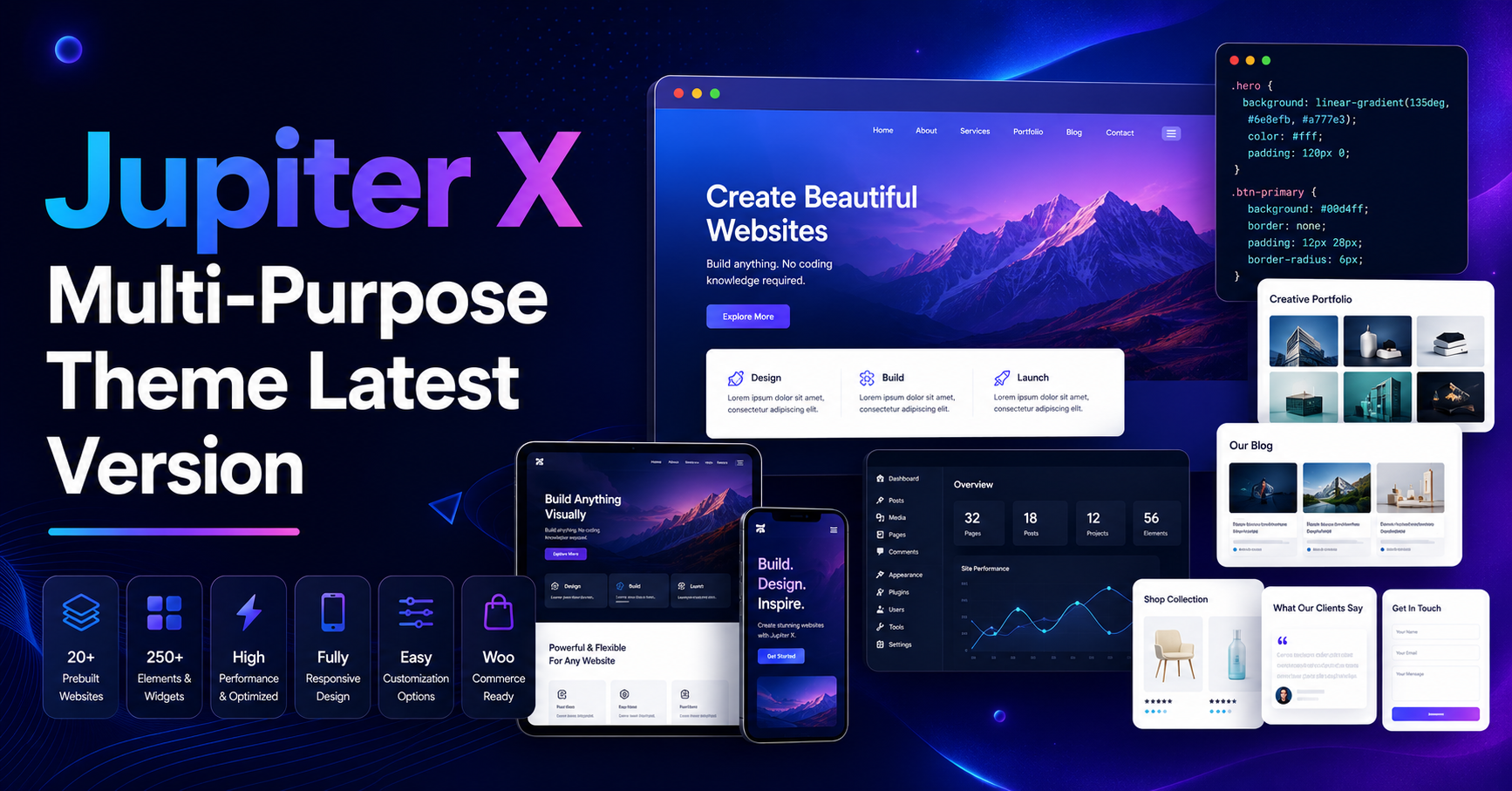
Achieving dominance across modern search engine index loops requires a foundational website framework capable of processing vast data arrays without blocking client browser workflows.
The Jupiter X multi-purpose theme leverages an intricate blend of core visual engines—relying on a tight synchronization between the native WordPress Customizer and advanced Elementor design frameworks.
When engineered accurately, this multi-faceted framework allows digital properties to deliver rich, conversion-focused layout blocks, deep WooCommerce transaction funnels, and complex multi-device menus with zero layout lag.
However, modern indexing algorithms track script load times and Interaction to Next Paint (INP) indicators with high precision. Forcing heavy frontend code blocks onto a low-tier server environment will flag your domain and drop its visibility.
Because of this, technical web developers are executing rapid performance audits across their site networks. Agency administrators regularly trim heavy theme features, shifting site layouts to bare-bones blocks or deploying clean structural designs using speed-first ecosystems like Bricks Builder, Breakdance Pro, or Spectra Pro.
This installation and optimization manual details the correct file integration process for the Jupiter X Multi-Purpose Theme Latest Version Free Download, alongside critical performance modifications to secure an elite crawl rating in 2026.
Technical Deep Dive: Dissecting the Jupiter X System Core
Integrating the Jupiter X Multi-Purpose Theme Latest Version Free Download requires a deep understanding of its dependent asset ecosystem. Unlike standard monolithic themes, the theme offloads its primary styling utilities onto a specialized companion layer—the Jupiter X Core plugin.
This modular infrastructure is specifically designed to eliminate the need for Elementor Pro by injecting premium capabilities directly through native framework hooks.
Under-the-Hood System Components:
- The Raven Framework Extension: This native plugin works directly inside your baseline page editor to unlock advanced, lightweight structural controls like dynamic header maps, local SVG icon arrays, and synchronized navigation menus.
- Full Site Customizer Syncing: Instead of relying on constant database queries (
wp_options), the internal layout compiler converts customizer parameters into static, minified file configurations stored within your local web storage directory (/wp-content/uploads/). - Jet Suite Add-on Nodes: The default file tree contains premium structural scripts (such as JetPopup, JetMenu, and JetSmartFilters) that read template designs as self-contained JSON strings, bypassing external plugin overhead entirely.
Server Environment Preparation
To prevent installation timeouts, database compilation locks, or white-screen-of-death errors during layout imports, your hosting backend parameters must match these precise environment configurations:
- Runtime Engine Environment: PHP 8.2 or PHP 8.3 Ready
- Memory Limit Maximum:
memory_limit = 512M - Input Handling Allocation:
max_input_vars = 5000 - Script Processing Window:
max_execution_time = 300
Step-by-Step Theme Installation & System Core Activation
To ensure your layout elements load without asset mapping conflicts, the parent style files and the core engine modules must be uploaded in the exact sequence detailed below.
Dashboard Inspection: Verifying the Layout Control Panel

Manual Deployment Protocol:
- Log into your WordPress administrative core control panel.
- Navigate through your sidebar interface to Appearance > Themes > Add New Theme.
- Select the Upload Theme utility at the top of the interface, click Choose File, and point to the unzipped
jupiterx.zipproduction archive. - Once the package finishes unpacking onto your web server, select the blue Activate link.
- The interface will automatically load the main onboarding page. Click the Install Required Plugins button to instantly connect the matching build of Jupiter X Core, Advanced Custom Fields Pro, and the necessary layout extensions.
2026 Core Code Comparison Matrix
An objective look at how the code architecture behind the Jupiter X Multi-Purpose Theme Latest Version Free Download runs against top alternative visual web design environments on metrics like asset weights, script delivery, and layout control layers.
| System Performance Metrics | Jupiter X Multi-Purpose (Current Build) | Bricks Builder Suite | Breakdance Pro Engine | Spectra Pro Framework |
|---|---|---|---|---|
| Visual Rendering Foundation | Customizer + Elementor Hooks | Direct Native Canvas | Clean Independent Plugin | Native Core Block Layer |
| Base Theme Zip Weight | ~11.8 MB (Highly Multi-Purpose) | ~4.2 MB | ~8.4 MB | ~2.1 MB |
| Premium Asset Strategy | Integrated Bundled Plugins | Self-Contained Functions | Modular Engine Files | Gutenberg Block Extensions |
| Database Option Model | Unified Style Cache Files | Local Meta String Queries | Direct JSON Loop Handling | WordPress Native Options |
Hardening the Rendering Pipeline for Search Engines
Once the core files are fully active, skip standard onboarding assistants and configure these advanced optimization tabs manually to ensure your Core Web Vitals marks stay firmly in the green zone.
1. Enforcing Local Asset Delivery Controls
Navigate via your dashboard panel to Jupiter X > Settings. Look for the asset performance section and toggle the custom scripts cache engine to Enabled. Next, access your global typography options and turn off remote calls to external Google Fonts networks. Configure the asset engine to pull font shapes and vector sets directly from your local site storage directories (/wp-content/uploads/jupiterx-fonts/). This stops external DNS tracking calls and cleans up render-blocking item flags inside your performance trackers.
2. Disabling Legacy JavaScript Dependencies
Go to your advanced developer preferences panel and ensure that ancient script call-outs like waypoints.js or legacy icon scripts are toggled completely off. The modern theme updates allow you to structure interactions and mobile display controls using native CSS animations and clean, lightweight modern script arrays. This lowers your total page script sizes and eliminates script execution delays on mobile devices.
Index Readiness Validation Audit
To ensure your layouts and display configurations are parsing accurately after setting up the Jupiter X Multi-Purpose Theme Latest Version Free Download, navigate through your control sidebar to Templates > Layout Builder. Verify that all your active header instances, singular post templates, archive grids, and global search result templates display active green checkmark tags.
Load your root URL within a clean private incognito browser window to confirm design layout continuity across standard mobile and tablet viewports. Keep your hosting core files completely clear of duplicate styling plugins, manage your staging folders safely, and inspect your Search Console data properties daily to track your rising organic keyword ranks.